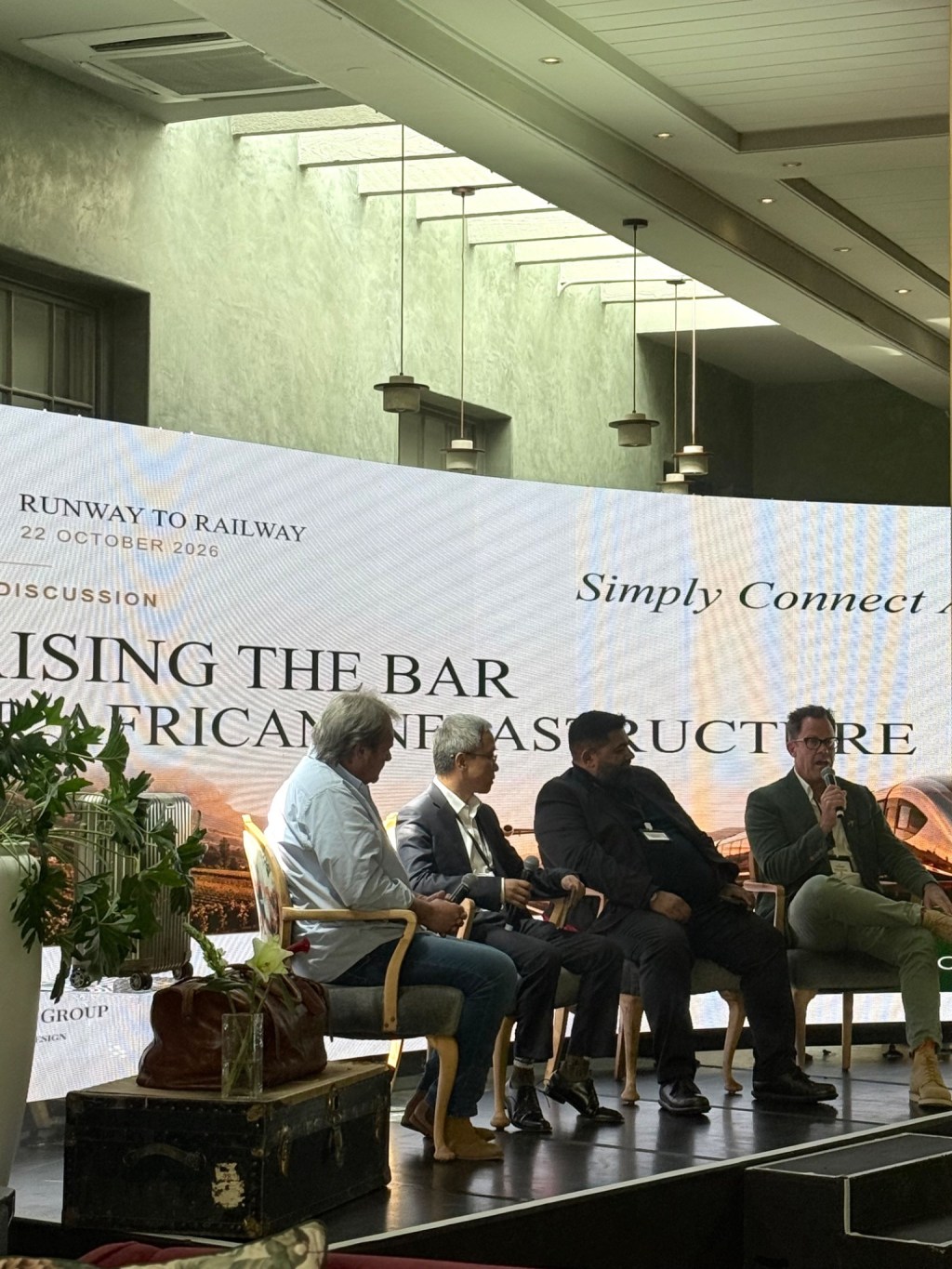
Taking in the energy across the room at the Vineyard Hotel in Cape Town on 22 October 2026, attendee Raees Amardien, Sales Executive at Meeting Focus, captured the underlying spirit of the day: “Some events begin with an invitation. Others begin with a vision that takes years to bring to life.”
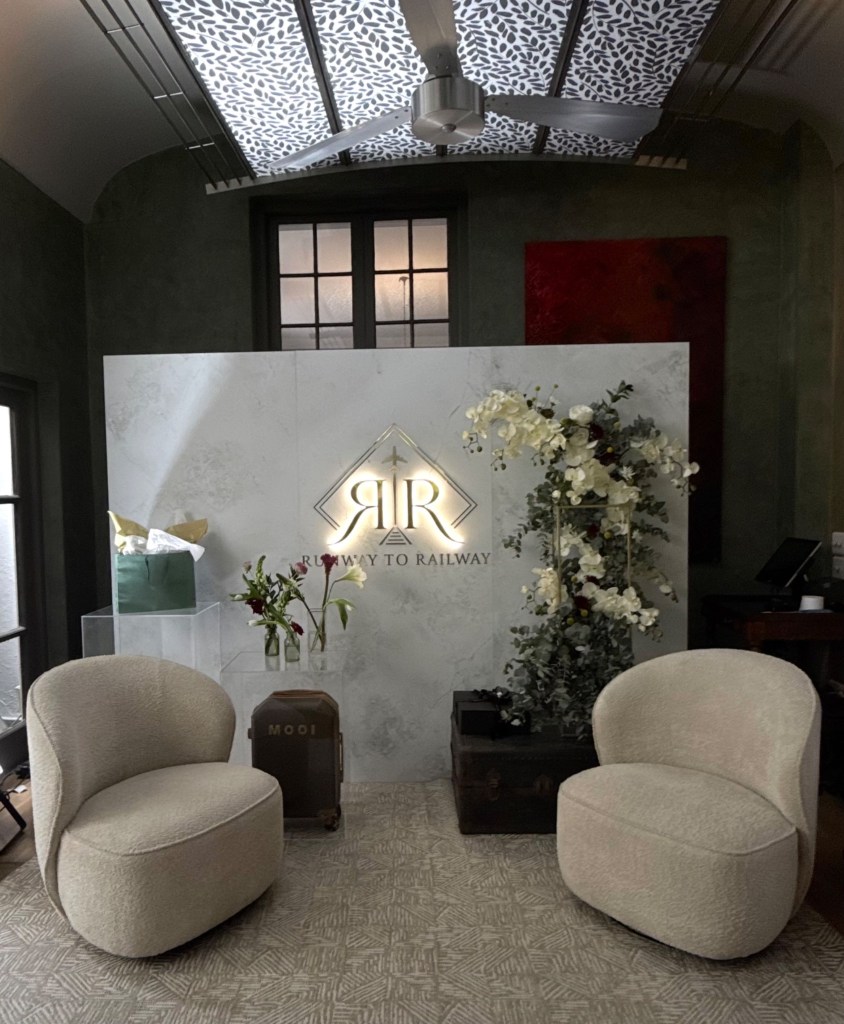
That observation went straight to the core of Runway to Railway: Project Maverick. Convened under the theme “Simply Connect Africa,” the gathering reflected the sustained time, commitment, and cross-sector alignment needed to get complex infrastructure off the ground. Conceived by Anna K Hecart, Founder and Director of Connected Group, the platform breaks down industry silos by linking aviation, technology, and creative industries to drive real socio-economic opportunity across the continent.
Beyond Concrete: Identity and Social Dividends
The discussions moved quickly past conventional engineering talk, focusing on human-centric transit. The room rallied behind a shared mandate: “Think beyond your environment — make the unbelievable, believable. Create social development.”
Rather than defaulting to generic, imported terminal designs, the consensus emphasized that African transit hubs should celebrate indigenous creative identity while actively feeding economic value and skills development back into surrounding communities.
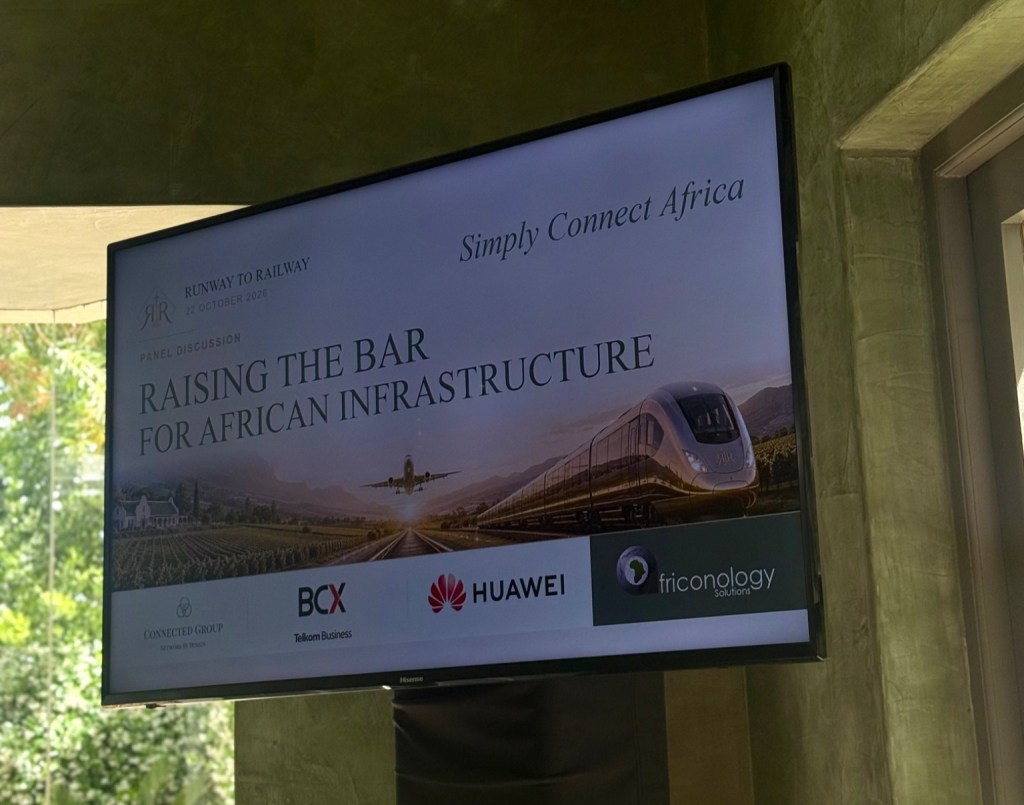
That practical convergence took center stage during the panel “Raising the Bar for African Infrastructure,” moderated by Dirk Ackerman. Featuring Nicholas Ferguson (Executive Managing Director, RSA Aero), Hasnain Motlekar (Acting CEO, BCX), and York Ning (Director of ICT Marketing & Solution Sales, Huawei South Africa), the panel explored how enterprise ICT systems, robust telecommunications, and forward-looking aviation design unite to build resilient regional gateways.
In Conversation with Nicholas Ferguson: The Realities of Aviation Fuel
In an interview on the sidelines of the event, Nicholas Ferguson offered a sharp reality check on Sustainable Aviation Fuel (SAF) and airport operating economics, dispelling the idea that SAF requires parallel, duplicate infrastructure:
“SAF is a drop-in fuel: under ASTM D7566 it is blended into Jet A-1 at up to 50% and moves through the same tanks, hydrant and bowsers as conventional fuel. The infrastructure decision is therefore not a separate SAF system, it is a fuel farm designed from day one to receive, segregate and certify blended product — which is how RSA Aero Fuel, our wholly owned fuel subsidiary, is specifying the depot, segregated receipt tankage and blend certification in the Phase 1B fuel-farm spec.”
Ferguson was equally candid about market volatility, emphasizing that commercial structure—not SAF—is what truly protects carriers from crude shocks:
“What actually shields airlines from oil shocks is not SAF — SAF trades at a premium to Jet A-1 — but supply structure. Cape Winelands Airport will buy fuel on its own account rather than ceding the fuel concession to a single oil major, which lets us source competitively from multiple suppliers, including integrated international partners IECO and others, hold deeper strategic stock, and price to airlines off average cost rather than spot. That is where the insulation comes from. SAF availability is then a sourcing question we can switch on as South African and international supply matures, without rebuilding anything.”
The Road Ahead
Project Maverick proved that closing Africa’s infrastructure gap is not about importing pre-packaged blueprints or issuing vague green promises. It comes down to commercial candor, smart engineering, and years of patient cross-industry collaboration.
When infrastructure combines technical rigor with authentic African identity, it builds lasting resilience for the entire region.
FOLLOW US:
Twitter: https://twitter.com/meeting_focus
Instagram: https://www.instagram.com/meeting_focus
Facebook: https://www.facebook.com/meetingfocus/
For more information you can email us: http://www.Meetingfocus.co.za



Leave a Reply